How Dental Problems Affect Your Horse’s Performance and Behavior
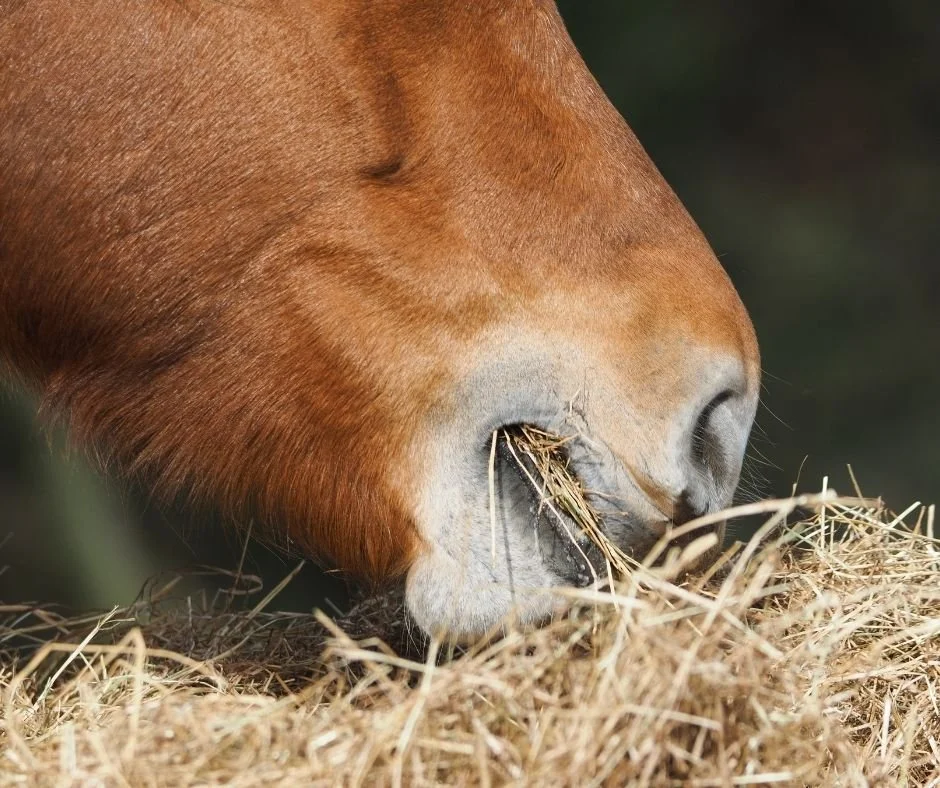
Last month, I worked on a sweet gelding who had started acting “difficult.” His rider said he was tossing his head, refusing to take the bit, and even leaving grain in his bucket—something he had never done before. At first glance, it looked like a training issue. But once we looked in his mouth, the real problem became clear: sharp enamel points had been digging into his cheeks every time he chewed or picked up the bridle.
Within a week of floating his teeth, he was back to eating happily, soft in the bridle, and much more comfortable under saddle. Stories like his remind us just how much dental health impacts a horse’s comfort, performance, and even their personality.
How Dental Problems Show Themselves
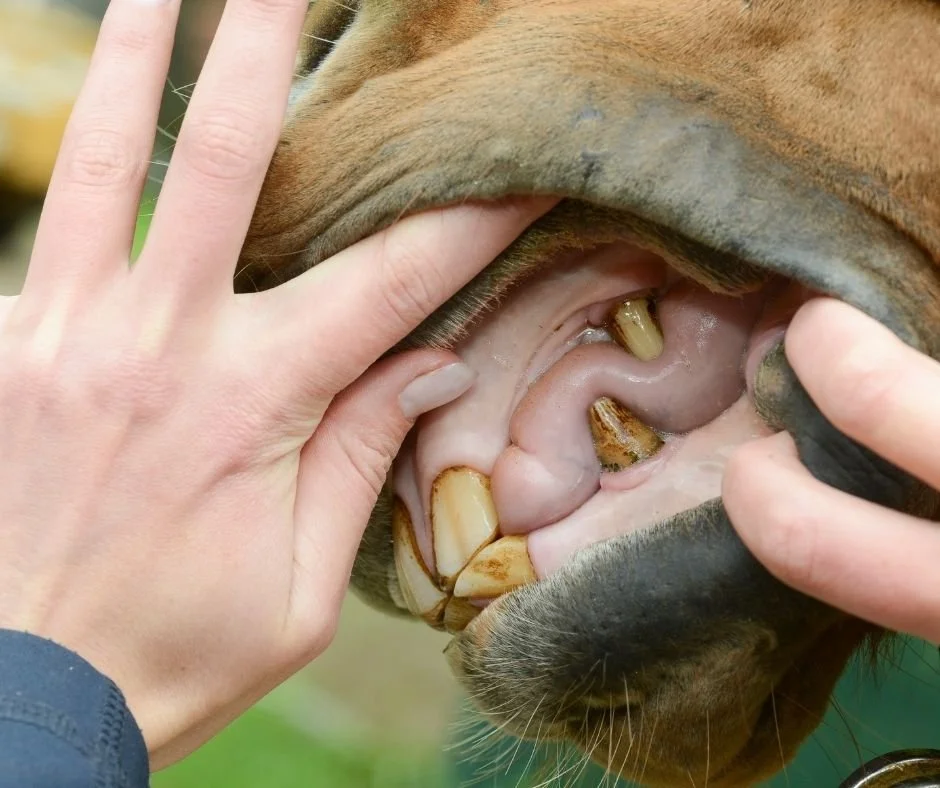
Horses don’t tell us when something hurts, but they show us in small ways. A horse with dental pain may:
Drop feed or spit out half-chewed hay
Chew with their head tilted to one side
Lose weight despite eating the same ration
Toss their head or resist the bit
Develop nasal discharge or foul breath
Sometimes owners notice subtle changes—like a horse who’s just not as willing under saddle, or one that seems crankier than usual. These shifts aren’t “bad behavior.” They’re a horse’s way of telling us something is wrong.
Why Comfort Matters
Think about how much easier it is to concentrate when you aren’t distracted by a toothache. Horses are no different. When their mouths are pain-free, they:
Chew and digest feed more efficiently, keeping weight on with less effort
Stay soft and responsive in the bridle
Move with more relaxation through their back and neck
Feel more willing to train and perform
I’ve seen horses transform after dental care—suddenly eating cleanly, carrying themselves better, and showing a calmer, happier attitude in daily work. Dental care isn’t just about preventing problems; it’s about giving your horse the comfort they need to feel and perform their best.
What Happens at a Dental Exam
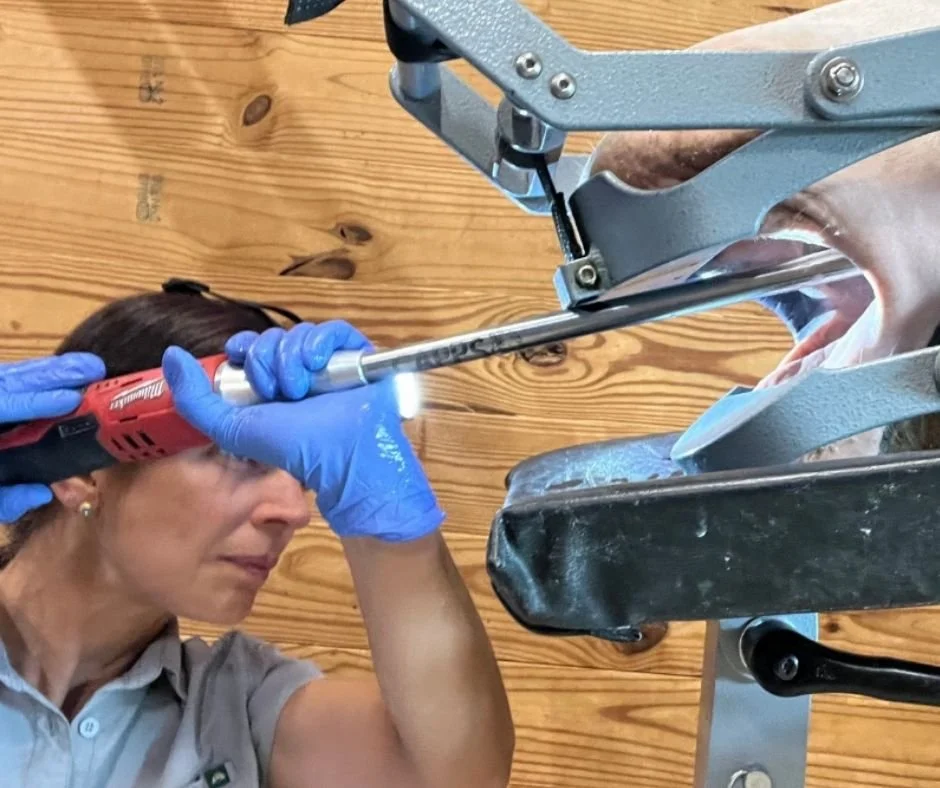
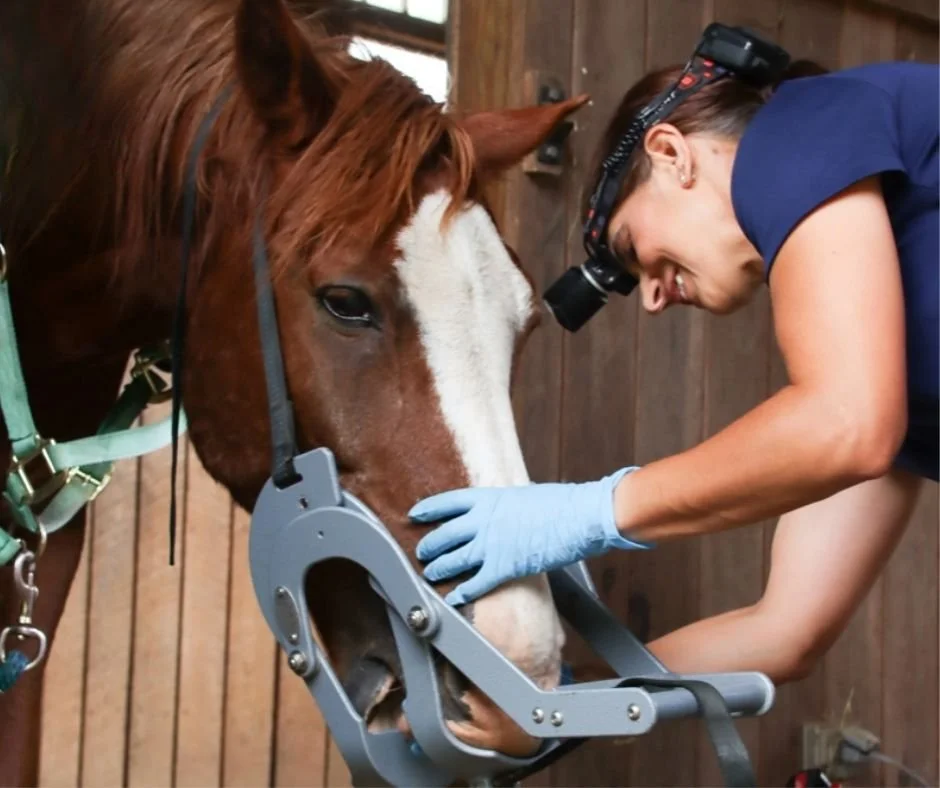
The process itself is simple and low-stress. Horses are lightly sedated so they’re relaxed, and a speculum allows us to see every surface of the teeth. Floating smooths out sharp points and restores balance to the horse’s functional grind surface. Most horses need this about once a year, while some—especially young horses coming into training or older horses with aging teeth—may need it more often.
Occasionally, we’ll also remove wolf teeth or address a loose or fractured tooth, but the goal is always the same: to make sure your horse can chew, perform, and live comfortably.
The Takeaways
Dental health is one of those things that’s easy to put off—until you see the difference it makes. A horse with a healthy, pain-free mouth is easier to ride, happier to train, and better able to thrive.
If it’s been more than a year since your horse’s last dental exam, now’s the time to book one. Your horse may not be able to say thank you—but you’ll see it in the way they eat, move, and carry themselves every day.